


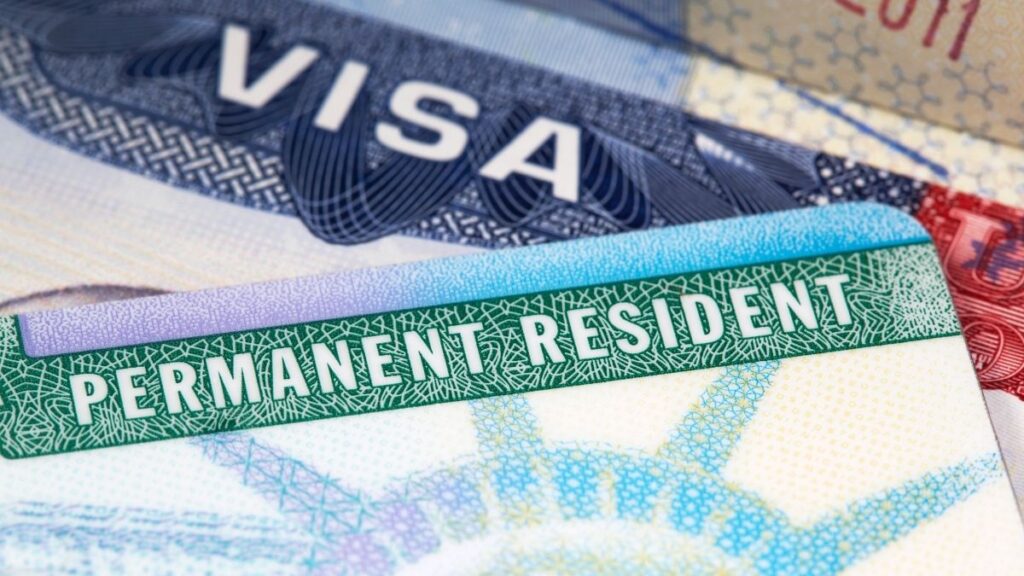
In July, the United States Department of Homeland Security announced that it will rescind the public charge rules issued under President Joe Biden. The rescission will allow DHS to consider any and all public benefits when determining whether someone is a public charge.
The final rule from the Trump Administration will go into effect on September 18, 2026, and according to Maddie Geschu, Director of Policy and Advocacy at Protecting Immigrant Families (PIF), outside of knowing the rule removes the guidance from the Biden administration, there is still no clarity on exactly how the rule will be implemented.
“So they’re removing the guardrails that the Biden administration put into place around how public charge could be considered and replacing it with nothing basically. And they say that they’re going to put out some more guidance for how immigration officers should judge public charge. But that hasn’t been put out yet. And so we don’t have a lot of information yet,” said Geschu.
The changes to public charge will impact any immigrant applying for a green card and, in mixed-status families, possibly the families and children of those applying as well. Whereas citizen children who qualify for the Supplemental Nutrition Assistance Program (SNAP) or childcare benefits did not used to count against the parent applying for a green card, it possibly can with the new rule, according to Geschu.
“When we look at who’s applying for a green card, which is the context that a public charge test would happen, it’s mostly adults,” said Geschu. “So the Biden rule is very specific, and it says, if you are applying for a green card, you’re not necessarily eligible for Medicaid, but your citizen child might be eligible for Medicaid. We’re not going to count that against you in this public charge test. And again, this new Trump final rule removes that guardrail and says, theoretically, we could count your child’s use of Medicaid or your child’s use of a public benefit that they’re eligible for.”
Without clear guidelines, Geschu stated that public charge will run amok and be left to the opinions of whoever conducts the test.
“So it really opens the green card process up to abuse based on partisan politics or an immigration officer’s personal bias. And it says, we’re letting you run wild,” said Geschu.
Geschu stated that the changes to public charge are contrary to public opinion, a study from PIF that showed 83% of Americans favor safety nets for lawfully present immigrants, and that the changes to public charge will primarily impact them and the children who are U.S citizens.
“We know that the primary impacts of this rule are going to be on lawfully present immigrants and U.S. citizen children,” said Geschu. “Because in most places across the country, undocumented individuals aren’t eligible for public benefits in the first place. And so when we’re talking about people being eligible for and receiving benefits, it’s those lawfully present immigrants, it’s people who are following a legal pathway to immigration, and it’s their U.S. citizen children and family members that are most going to be impacted by public charge and the confusion here.”
They continued to explain that along with being against what many Americans want, the rule itself is anti-American.
“We want to emphasize that this public charge rule is really un-American. It’s anti-the values that we have in the U.S.,” said Geschu. “We shouldn’t make important decisions based on secret criteria where immigration officers have an opportunity for bias to come into play. We shouldn’t make these kinds of immigration decisions based on politics. We shouldn’t be making these immigration decisions based on who looks like trouble, which is what this public charge lack of clarity really opens it up to.”
Aside from the issues that Geschu stated are in the final rule from the Trump Administration, they explained that public charge in general is an awful practice. Public charge is written into the Immigration and Nationality Act (INA), Geschu stated the risk in trying to remove it from the INA is that it could open the opportunity for an even worse process to take effect.
“So it’s like a cost-benefit analysis among PIF and among our partners in the policy space around would it be possible to remove public charge from the INA? That’s number one,” said Geschu. “Number two is: would it be possible to open up the INA period without offering an opportunity for other bad things to be slotted in there? And so that is kind of really where we sit right now. But from PIF’s perspective, yes, we think that certainly public charge being involved in the immigration process isn’t super helpful. And even more unhelpful is the fact that it’s gone back and forth. It’s like a basketball, back and forth. Nobody knows what it actually means anymore.”
Geshu stated that if public charge must exist, there should be very strict guidelines on what it means and how it is implemented. They stated that, in the INA, it seemed to be intended for green card applicants who would be completely reliant on the government, and that the fact that it may now be applied to children on SNAP is a “very far cry” from its original meaning. However, the final ruling and even the previous adaptations, such as those under the Biden administration, were open to greater bias.
“The whole public charge thing is based around people being able to be self-sufficient or not being able to be self-sufficient, right? That’s kind of the fundamental thematic idea here, but what helps people be self-sufficient? Medicaid, SNAP, right? State-funded health insurance programs, early education, all the kinds of things that we’re talking about within this context,” said Geschu.
They added that the final ruling from the Trump administration will open the door for racism, ableism, and other biases.
“It invites bias on what your family looks like, right? If you’re taking care of parents, for example, you may be more likely to be a public charge,” said Geschu. “Obviously, opportunity for bias on race, on disability, right? If you are walking into your appointment with a breathing machine, then that is obviously going to play a role in a public charge determination, or you’re in a wheelchair, for example, that is going to play a role in a public charge determination, right? So there’s so much opportunity for ableism, ageism, racism to play a role here. And that’s written in the law itself.”