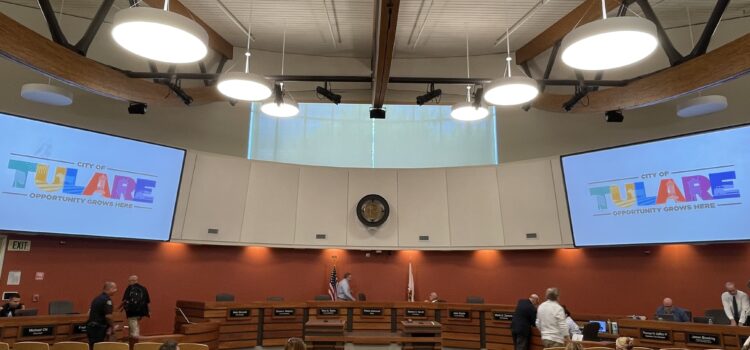
On August 4, in a 4-1 vote, the Tulare City Council meeting decided not to discuss the pros and cons of a data center, even though a council member had requested to place the item on the agenda for August 18 to decide if they should have a study session at a future date. According to Jose Sigala, Councilmember for District 1, he submitted the request amid concerns from constituents regarding the proposed data center at the Tulare County Fairgrounds.
Despite the proposed project being considered within county jurisdiction, Sigala recognized the need to have an educated discussion on the matter, even within city limits. The item, had it been approved for a future conversation, would’ve served as a study session for both city staff and the constituents of Tulare who the project would impact.
Although the overall disagreement on the matter was on the basis of a date and time to discuss the issue, Sigala noted, “There’s never not a time where we can be educated about this, so this is an educational process where we are gonna be provided information.”
He also stated that a study session would lead to a better understanding of data centers and give them room to take action if they choose to in the future.
“Maybe after we have the study session, we propose to ban them; maybe we propose some community benefits agreements saying if you’re going to bring a data center in, you gotta do x,y, and z. This will allow us to do that. I think it’s always better to be proactive than reactive,” expressed Sigala.
During the council reports, Marc McDonnell, City Manager of Tulare, informed the council that city staff had been in attendance at the July 21 meeting held by the 24 District Agricultural Association (DAA), in which DAA board members heard over two hours of public comments from concerned residents opposing the data center. The board, having tabled the item since April and being unable to conclude it, tabled it again for that July 21 meeting. The Santa Ana-based company, Global Stacks LLC, aims to have 70 California fairgrounds powered by the same system by at least 2030, with zero cost to the fairgrounds. Daniel Kang, founder and chief executive of the company, has also pitched a similar proposal in Kings County.
The proposed data center would be placed in the center of the fairgrounds and serve as an emergency resilience center, according to the proposal made by Global Stacks LLC. Global Stacks aims to have a helipad and a multi-level parking garage.
Mcdonell emphasized that staff recognized the lack of information on the project and reiterated that this isn’t a city project.
“This is not a city project to be reviewed or approved by the city at this time. We don’t have a lot of information about the project,” said Mcdonell.
Community Development Director Mario Anaya was one of the city staff members in attendance at the meeting and joined the discussion. Anaya explained the premise of the proposed project, noting that it would be a 100-year lease contract agreement with Global Stack LLC.
Anaya further explained that he noticed on the July 21 agenda that the Tulare DAA was to conduct a feasibility study and added that many residents within the city boundaries are requesting more information on this data center.
“We just look forward to seeing more information on the feasibility study. We know as a city a lot of big infrastructure projects are subject to the California Environmental Quality Act (CEQA),” said Anaya. “So I just put it on the record that there’s a lot of concern among residents about the proposal. Still, there’s not a lot of information out there, and so we’ll continue to operate in good faith and look forward to evaluating it as it comes forth,” said Anaya.
Anaya added that he attended an additional meeting hosted by Assemblymember Macedo with Mayor Patrick Isherwood and Council Member Jose Sigala. Local representatives of Tulare County and state elected officials were also in attendance. He shared that the overall discussion during that meeting focused on the confusion and concerns from the public given the lack of information and communication received from the Tulare County DAA.
“Assemblymember Macedo’s office is going to prepare a letter to transmit to the state since that’s the jurisdiction that the Fairgrounds sits on state property and how the fair board is structured about the need for better local communication, engagement on this process, and what they envision for CEQA and other required approvals,” explained Anaya.
Anaya reiterated that on behalf of the city, he requested that the fair board make the most up-to-date and accurate information available to the public. The city submitted a public records request to the board to receive any materials associated with the proposal.
Thomas W Gaffery IV, Assistant to the City Manager, added that they will also be “monitoring city staff’s opinion about when the CEQA process should be initiated and what things may trigger the CEQA process relative to land use on their state property.”
According to McDonell, because information is still unclear, the city would not be able to make a final determination or exercise authority on the matter until further facts are released indicating that the state has some jurisdictional responsibility to review the proposal.
Esmeralda, a resident from Visalia who works primarily in Tulare, shared her concerns with the council regarding the data center.
“Tulare is a residential area, only eight miles long; if the data center is allowed to grow, 60% of Tulare will be affected,” said Esmeralda.
Tulare County is home to approximately 482,779 people, most of whom live within walking distance to the fairgrounds or even 3.5 miles away, close enough to hear the hums that will be released from this data center.
She then urged the council to get involved in this decision-making and to do their research on data centers. She cited the environmental and physical impacts this proposed data center would have on the residents and livestock in Tulare County.
