On August 27, a series of community organizations from across California joined together to discuss the fight against the rise of data centers in their respective communities. Power California, Loud For Tomorrow, Move The Valley, Food and Water Watch, and Green Latinos attended, offering input on community efforts, strategies to combat this ongoing issue, and what others can do moving forward.
Daniel Probello with Reclaim Our Power was one of the first moderators on the online webinar to provide insight on the fight taking place in Southern California.
Probello also explained what exactly a data center facility is and its overall purpose. Although many have only recently become aware of the hyperscale data centers being proposed throughout the country, Probello shared that data centers have always been around.
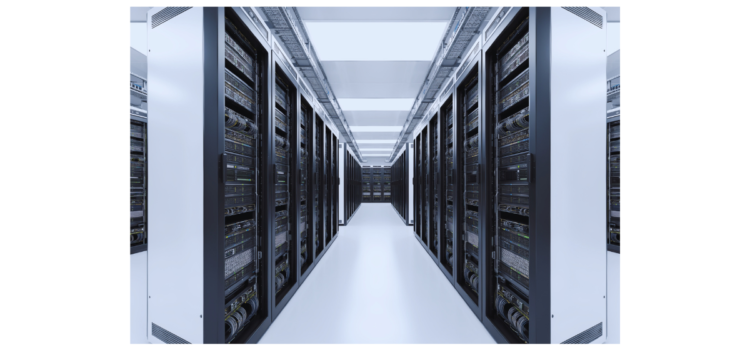
“A data center is any facility that houses computing equipment; typically these are large warehouses with rows and rows of servers. It’s just a type of computer. We’ve had data centers for decades, and a common right-wing talking point is that if you watch Netflix or have a cell phone, you need these new data centers. But that’s not accurate,” said Probello.
He emphasized that current data center projects are driven by generative AI, making them different from traditional data centers.
“They are massively larger, consume more energy and water, and have more significant environmental harms like noise pollution, emissions, and lots of other stuff,” he said. “These data centers consist of basically two systems: the servers- that is, the racks and racks of computers- and a cooling system. Traditional data centers mostly run central processing units; these are usually air-cooled and require much less power.”
MIT Energy Initiative adds that a “single hyperscale data center can consume as much electricity as 50,000 homes.” The report further explained that energy demand from these facilities is growing rapidly and estimates that by 2030, energy consumption from these data centers will skyrocket to 9 percent, a 5 percent increase since 2023.
Another point Probello mentioned is that these AI data centers aim to use recycled water; however, he notes that this information is inaccurate because of the two current types of liquid cooling systems. The first system is the open cooling system, which evaporates millions ofgallons of water a day. The second is the closed-loop cooling system, which, despite recycling water, typically uses an average of 500,000 gallons of water, explained Probello.
A report published by the San Francisco Chronicle illustrates that over 24 major data centers are currently being pitched for future projects or planned for future construction. Currently, there are over 296 data centers in California, mainly traditional, with no sign of any current generative AI hyperscale data centers.
He further added that many of these proposed data center projects are being signed without providing transparency to communities. Non-Disclosure Agreements (NDAs) have been a factor in why these plans have not been made public. Probello suggested the following ways and tools communities, advocates, or organizations can use to find information on data centers.
“You can maybe find information on data centers by searching your local papers, local city council meeting agendas, economic development corporations, and look for large land sales or rezoning that could signal a data center project,” he said. “Look for not just the words data centeror hyperscale but also large land developers and search for the big tech companies, Amazon, Google, Meta, Microsoft, Apple, OpenAI, Oracle.”
Additionally, data center maps track these projects nationwide and are free to the public.
